He Who Controls the Media, Controls the Mind
On Violent Ignorance, Manufactured Catharsis, and the Collapse of Civic Action
When I was younger, I used to drive past an overpass near my home on Miller Road by the Palmetto Expressway. For years—day after day—there was a short phrase spray-painted onto one of the concrete pillars. It wasn’t large. It wasn’t elaborate. But it stayed.
“He who controls the media, controls the mind.”
At the time, I didn’t fully understand how much that sentence was shaping me. Only later did I realize that repetition, not argument, is often what does the deepest work.
This essay is about that slow work. About how media has quietly transformed civic engagement, activism, and even our understanding of truth itself—not through overt propaganda, but through emotional substitution, desensitization, and a growing culture of what I call violent ignorance.
When Media Once Led to Action
There was a time when exposure led to responsibility.
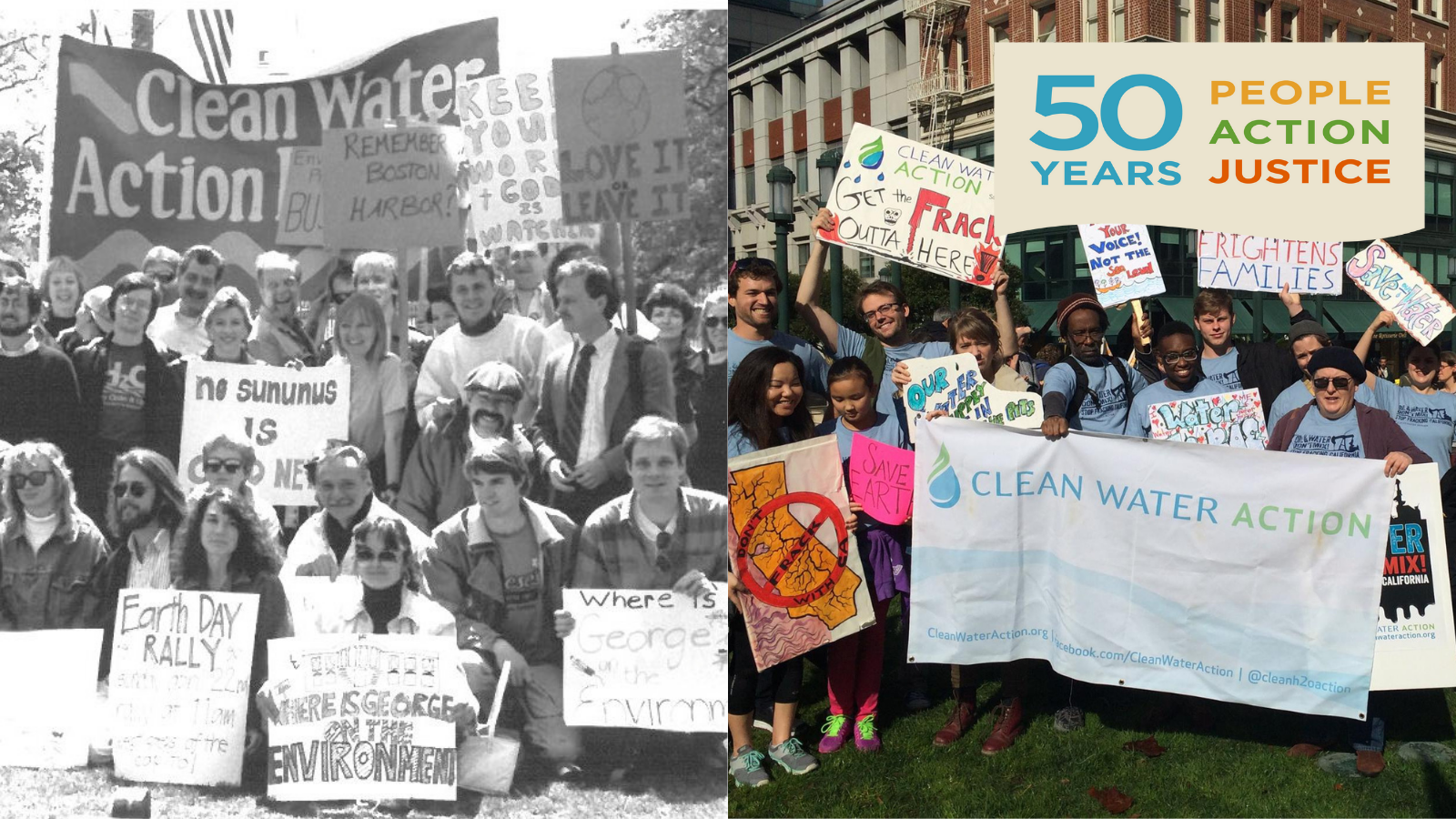
In the late 1960s, Americans watched a televised report showing industrial pollution so severe that Lake Michigan was catching fire. The footage was shocking, undeniable, and impossible to rationalize away. People didn’t simply react emotionally and move on. They demanded action. That public pressure contributed directly to the passage of the Clean Water Act.
A similar pattern occurred with the ozone layer crisis. When scientists demonstrated that chlorofluorocarbons were destroying the atmosphere’s protective layer, governments didn’t argue endlessly about opinions. They acted. CFCs were banned. The problem didn’t “go away on its own”—it was solved through coordinated, informed pressure.
The key point is this:
Media exposure did not replace action. It triggered it.
“You’ve Had Your Cry”: The Lorenzo’s Oil Syndrome
Something fundamental has changed.
Today, media often provides emotional release instead of resolution. I refer to this as the “You’ve Had Your Cry” phenomenon, or what might be called the Lorenzo’s Oil syndrome.
A serious issue is dramatized. A documentary is made. A film wins awards. The audience feels sadness, anger, even moral clarity—and then, unconsciously, assumes the problem is being handled by someone else. The emotional transaction is complete.
You’ve had your cry.
Now go away.
The issue doesn’t get fixed. It simply disappears from attention.
Modern media excels at catharsis without consequence. Viewers mistake awareness for action, visibility for accountability. This shift has quietly dismantled collective responsibility while preserving the illusion of moral engagement.
Desensitization as a Strategy: Reality TV and the Normalization of Force
Nowhere is this more evident than in so-called “reality” television.
Shows like Cops—arguably one of the most damaging programs ever broadcast—normalized violent state power by repetition. Doors were kicked in. People were humiliated, restrained, threatened. Viewers were taught, over time, that this was not only acceptable, but necessary.
What most people did not know at the time is that much of this content was scripted or legally staged. Real police behavior conducted this way would have resulted in cases being thrown out for civil rights violations. The fiction provided legal cover.
More importantly, it functioned as psychological conditioning.
The absence of public outrage was not accidental. It was measured.
Exposure familiarized the public with authoritarian tactics,
while silence was interpreted as consent. This is not conspiracy; it is basic behavioral psychology.
Repeated exposure changes norms.
Violent Ignorance and the Illusion of “Doing Your Own Research”
This brings us to violent ignorance—not stupidity, but confidence without competence, combined with hostility toward correction.
The modern phrase “do your own research” is often deployed by people who fundamentally misunderstand what research is. Research is not watching videos, scanning blogs, or cherry-picking sources that feel emotionally satisfying. Real research requires training, peer review, methodological rigor, and humility.
This is where media exploitation becomes dangerous.
Major networks have repeatedly defended themselves in court by arguing that their content is opinion or entertainment, not factual reporting. These legal defenses matter because they reveal a truth viewers are rarely told: what feels like news may not legally be news at all.
Yet audiences consume it as verbatim fact.
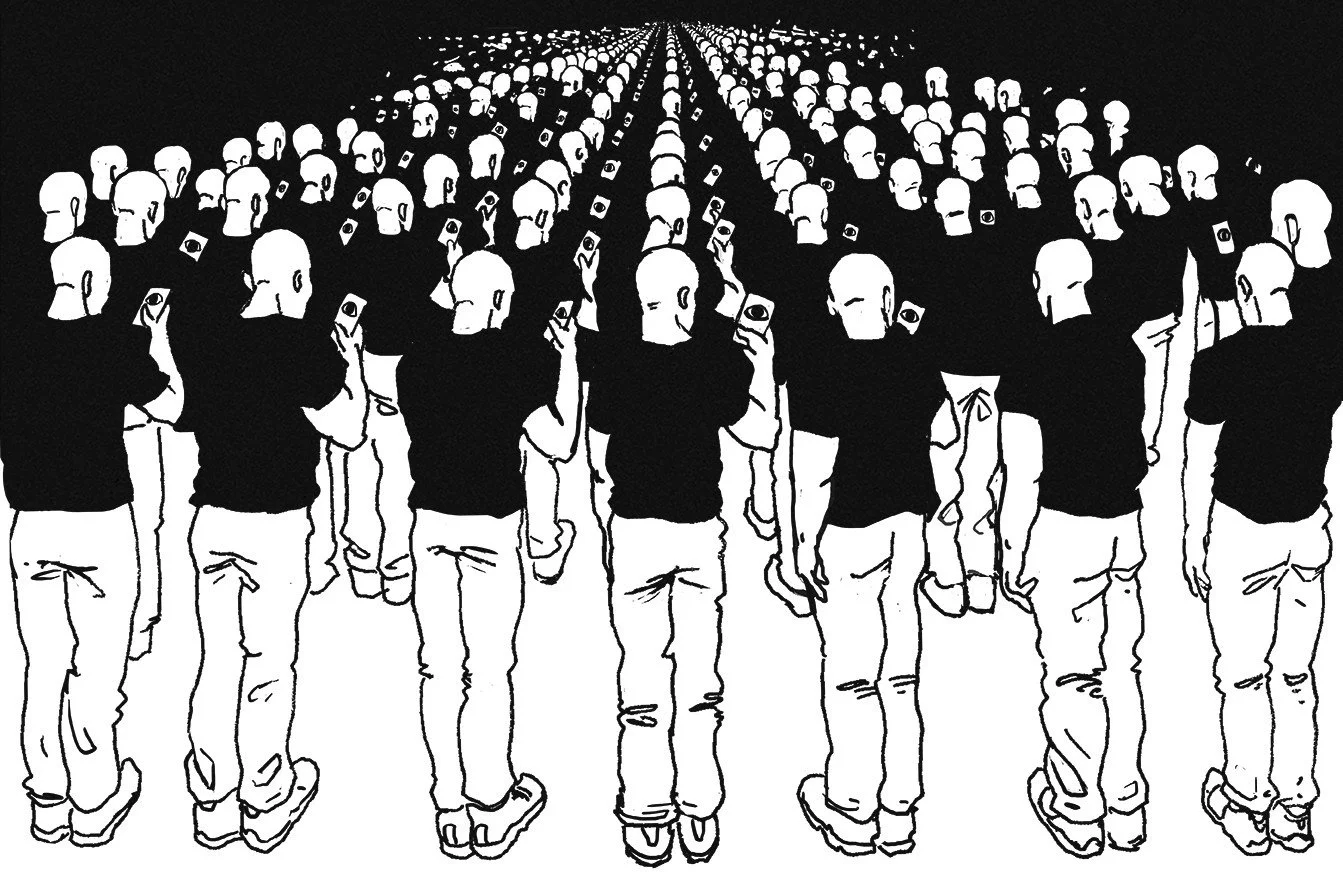
The result is a population that believes itself informed while being structurally misinformed—and aggressively resistant to correction. That resistance is what makes the ignorance violent. It shapes votes, policies, and real-world harm.
Media, Myth, and Cultural Conditioning
Anthropology and media studies have long shown that stories shape societies more powerfully than laws.
Films like Tarzan and Robinson Crusoe reinforced colonial myths of “civilized” saviors and “primitive” others. Modern war films such as Black Hawk Down frame geopolitical conflict through narrow moral lenses, conditioning audiences to accept simplified narratives of violence and heroism.
Even animated films—Finding Nemo, for example—encode assumptions about hierarchy, authority, and acceptable risk in ways that subtly reinforce cultural norms.
These narratives are not neutral. They teach viewers how to feel, who to trust, and whose suffering matters.
The Dismantling of Counter-Ideologies
Perhaps most telling is what happens when media franchises that once challenged dominant ideologies are diluted or dismantled.
Star Trek was fundamentally aspirational—post-scarcity, cooperative, pluralistic. Its destruction through cynical reboots is not accidental. When stories that imagine alternatives to power hierarchies disappear, so does the public’s ability to imagine them.
Media doesn’t just reflect culture.
It defines the boundaries of what people believe is possible.
Conclusion: Reclaiming Agency
We are not suffering from a lack of information. We are suffering from engineered disengagement.
Media today offers outrage without direction, emotion without obligation, and confidence without understanding.
This environment produces violent ignorance: a state where people are deeply affected, loudly opinionated,
and fundamentally disconnected from responsibility.
If we want change, we must reject passive consumption. We must relearn the difference between awareness and action, between opinion and knowledge, between feeling informed and being informed.
Because the message on that overpass was right.
Whoever controls the media does, eventually, control the mind.
And the only defense against that is deliberate, educated, sustained engagement.